
Posh – Create & Find Events
PoshEvents
4.8165.00 Reviews
- Version
- 8.24.0
- Installs
- 100.00K
- Age Rating
- Teen
Screenshots

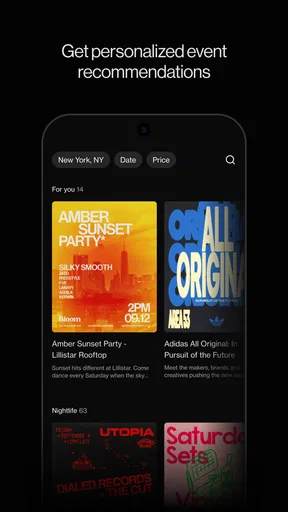
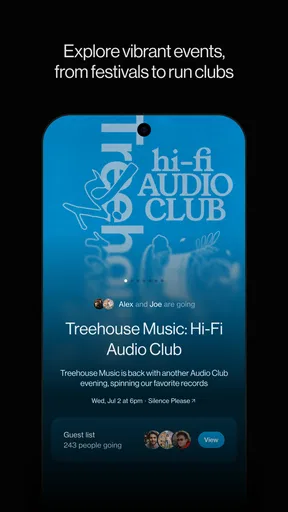
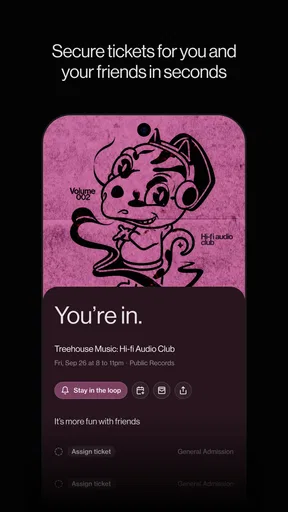
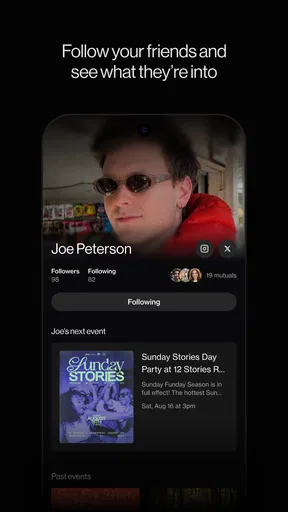
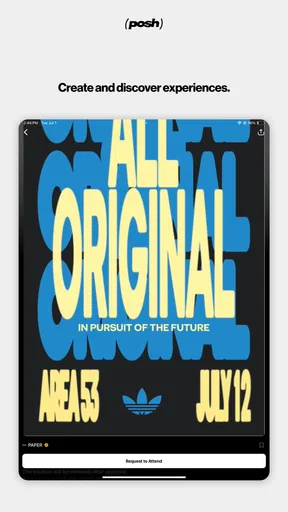
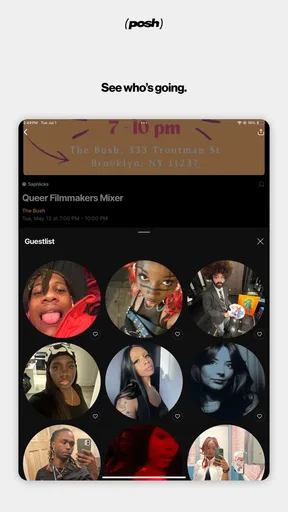
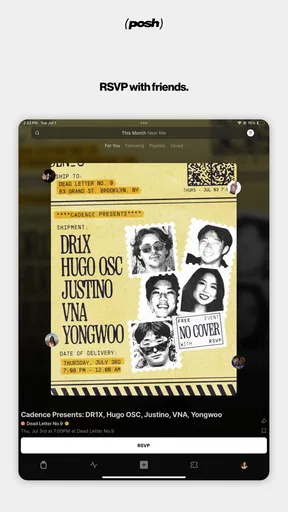
Our Review of Posh – Create & Find Events
 Analysis by Appyee
Finding something to do is easy when you already know the venue, date, and people involved. The harder part is discovering an event that actually fits your mood, coordinating with friends, and keeping the details in one place. I tested Posh – Create & Find Events as an events app, and my impression is that it works best as a meeting point between people looking for plans and organizers trying to gather an audience.
The app is free, comes from developer Posh, and is aimed at a teen audience. Its public presence is already meaningful, with over one hundred thousand installs and an average rating of 4.8 from around two thousand ratings. Those figures do not tell me whether every event will be relevant to me, but they do suggest that Posh is more than a tiny personal calendar tool. It is built around an active event ecosystem, not just reminders for appointments I have already made.
How I Decide Whether Posh Fits My Plans
My first test for an event app is simple: can it help me move from “we should do something” to a real plan without making me search several unrelated places? That means discovery matters, but so does the practical side. I want enough context to judge whether an event is worth my time, a way to keep track of what caught my attention, and a clear path for organizers who want to publish something of their own.
Posh is particularly interesting because it serves both sides of that decision. I can approach it as someone browsing for an activity, but an organizer can also use the same ecosystem to put an event in front of potential attendees. That dual purpose changes the experience compared with a basic calendar. A calendar assumes I already have the information. Posh is more useful earlier, when I am still deciding what to attend.
The app’s store summary describes a network of more than five million eventgoers and organizers. I read that as a sign of ambition rather than a promise that every local search will be equally strong. Event discovery is naturally dependent on location, timing, and the type of community using the service. In a large or active area, the broader network can make browsing worthwhile. In a quieter area, a familiar local listing service may still be more practical for everyday plans.
Another decision point is whether I want discovery or administration. Someone seeking a concert, social gathering, campus activity, or community occasion may appreciate a dedicated place to browse. Someone who only needs a private reminder for a dentist appointment would probably be better served by the calendar already on their phone. Posh makes more sense when an event has a social life beyond my own schedule.
What the experience feels like for an attendee
As an attendee, I would use Posh at the beginning of the planning process rather than after everything is settled. For example, imagine that a friend messages me on a Thursday afternoon asking what we should do over the weekend. Instead of opening a general search engine and checking several venue pages, I can start with an events-focused service and look for options that match the kind of outing we want.
The useful habit here is to browse with a decision already in mind. Am I looking for something spontaneous, something social, or an event tied to a particular interest? If I open the app without any idea of what I want, a large event ecosystem can feel distracting. I get more value when I treat it as a shortlist tool: find a few plausible choices, inspect the details, then send the best candidates to the people who are actually coming.
That workflow is more realistic than expecting an event app to make the whole decision for me. Posh can reduce the effort of finding possibilities, but I still need to check whether the date works, whether the location is convenient, and whether the event suits the group. The app helps with the first part of the process; it does not remove the human negotiation that follows.
A small but important tip is to avoid judging an event from its title alone. Event platforms often contain listings that sound appealing but differ greatly in atmosphere, timing, or audience. I would open the full listing before sharing it, then compare several options rather than forwarding the first result. This is one of the practical strengths of using a dedicated event service: I can evaluate plans in their event context instead of piecing together fragments from unrelated posts.
Why organizers may see more value
For an organizer, the appeal is different. The challenge is not merely writing down a date; it is getting the event in front of people who might attend. Posh places organizers and eventgoers in the same environment, which can make publishing feel more connected to discovery than posting a notice in a private group.
I can see this being useful for recurring community efforts, social gatherings, student activities, and independent events that need visibility beyond an existing contact list. The audience does not have to begin with people who already follow the organizer elsewhere. That makes the app more attractive when the goal is to reach new attendees rather than simply remind an established group.
The trade-off is that visibility does not automatically equal attendance. An organizer still has to write a clear description, choose an appealing presentation, and keep the information accurate. A vague listing creates uncertainty, especially when people are comparing several events. My practical advice would be to treat the event page as the first conversation with a potential attendee: explain what the experience is, who it suits, and what someone should know before deciding.
There is also a useful separation between discovery and commitment. A person may find an event through Posh but still need to coordinate with friends, plan transportation, or fit it around other obligations. Organizers should therefore avoid assuming that a listing view means a confirmed participant. The platform can open the door, but the quality of the event information and follow-up still matters.
Where Posh has an advantage over ordinary alternatives
Compared with a general web search, Posh gives the activity itself more importance. A search engine is good when I know the exact venue or phrase I want, but it is less natural when I am simply looking for something interesting to do. Posh is better suited to browsing from the event outward, rather than starting with a business name and working backward.
Compared with a phone calendar, the difference is even clearer. A calendar is excellent for recording a decision I have already made. It is not designed to introduce me to an event community or help me discover unfamiliar plans. I would use a calendar after choosing an event, while Posh is more useful before that point.
Compared with a private messaging group, Posh can offer a more organized public-facing home for an event. Group chats are convenient for people who are already connected, but details can become buried under unrelated messages. An event-centered listing gives the plan a clearer identity. The downside is that a private chat may be faster for a small group that already knows exactly what it wants.
Compared with broad social networks, Posh has a narrower purpose. That focus can be refreshing because I am not asking a general feed to help me find a plan. On the other hand, broad networks may have stronger personal connections or more informal local conversation. If my priority is seeing what friends are posting, rather than discovering events as a category, another service may feel more natural.
Small workflows that make the app more useful
The first workflow I recommend is a “shortlist before sharing” approach. I would browse several possibilities, remove anything that does not fit the group, and then send only two or three serious options. This avoids turning event discovery into an endless stream of links and gives friends a manageable choice. It also makes the app useful even when the final plan happens elsewhere.
The second is to separate discovery time from decision time. I might browse Posh during a quiet moment, save the promising idea mentally or through the app’s available event flow, and discuss it with friends later. This is better than trying to commit immediately while distracted. Event browsing is often enjoyable, but the best choice is not always the most eye-catching one.
The third is for organizers: review the listing from an attendee’s perspective before publishing or promoting it. Ask whether a stranger can understand the purpose, audience, timing, and practical expectations without sending a message first. This is a non-obvious advantage of thinking like both sides of the platform. The same event page that helps discovery also becomes a test of how much uncertainty the organizer has left unresolved.
A fourth useful habit is to treat Posh as a local discovery layer rather than a complete life organizer. Once I decide to attend, I may still use my regular calendar, maps, or messaging app for the remaining logistics. Trying to force one service to handle every part of a social plan can create more friction than using a small set of tools with clear roles.
Where Another Option May Be the Better Choice
Posh is not automatically the right choice for every event. If I am arranging a private dinner for a few friends, a group chat may be quicker and more personal. If I am tracking work meetings, appointments, and deadlines, a calendar is the obvious tool. If I need highly specialized registration, ticketing, or venue-management functions, I would compare Posh carefully with a service built specifically for that professional purpose rather than assuming an event discovery app covers everything.
It may also be less compelling for people who already have a dependable local source. Some communities organize almost entirely through neighborhood groups, school systems, venue newsletters, or established ticket providers. In that situation, adding another place to check can feel like extra maintenance. Posh becomes more valuable when it exposes options I would not otherwise see, not when it merely duplicates a source I already trust.
There is a similar issue for organizers with a very defined audience. If every potential attendee is already in a private membership list, publishing publicly may not add much. The broader ecosystem is more useful when the organizer wants discovery and reach. For a closed gathering, direct invitations can be simpler and give the organizer tighter control over communication.
I would also keep expectations realistic about event quality. A platform can make listings easier to find, but it cannot guarantee that every event will match my taste or that every organizer will communicate equally well. I would read details carefully, look for signs that the plan is clearly described, and avoid treating the app’s presence as a substitute for my own judgment. That is not a criticism unique to Posh; it is the normal trade-off of using an open event ecosystem.
For families, the teen content rating is worth noticing. It does not mean every event is suitable for every teenager or family situation. Parents and younger users should still consider the event itself, the organizer, the location, and the people attending. The age label is a useful boundary for the app, not a personal recommendation for a particular activity.
What switching to Posh involves
The cost of switching is fairly low for an attendee because the app is free and can sit alongside the tools I already use. I do not need to abandon my calendar or messaging app. The real cost is attention: I need to check another source, learn how its event presentation works, and decide whether it consistently offers plans relevant to me.
For an organizer, the investment is more substantial in time rather than money. A good listing needs thought, and maintaining accurate event information matters once people start relying on it. If the event changes, the organizer has to communicate that change wherever attendees are looking. The platform may simplify exposure, but it does not remove the responsibility of keeping the audience informed.
The current version is 8.20.0, and the app requires Android 8.0 or later. That makes compatibility an important practical check before downloading, especially for anyone using an older Android phone. On a supported device, I would still give the app a fair trial based on the events available in my area rather than deciding from the install alone.
Posh was released on May 16, 2023, so I see it as a relatively recent entry in a category that has many different habits and local ecosystems. That can be positive: a newer service may feel more focused on modern event discovery. It also means I would judge it by how well it fits my community today, not simply by assuming that a large network guarantees local usefulness.
If I were switching from a general social feed, I would start with one specific goal: find an event for an upcoming weekend or publish one gathering. After that, I would decide whether the app saved me time. This trial is more informative than casually browsing without attending anything. The value of Posh is practical only when it helps me take a real event from idea to action.
My recommendation for different kinds of users
I recommend Posh to people who enjoy discovering plans, want a dedicated place to browse events, or organize activities and need to reach beyond a small existing circle. It is especially worth trying if your current method is a messy combination of social posts, scattered venue pages, and group-chat suggestions. The app brings those intentions closer together by giving events their own setting.
I would recommend it more cautiously to someone who already has a strong local routine. If your friends, venues, and community groups already provide everything you need, Posh may be an optional extra rather than an essential replacement. Try it when you are actively looking for something new, then compare the results with the sources you already use.
For organizers, my recommendation depends on the goal. Choose Posh when discoverability matters and you want your event to exist in the same environment where people browse for things to do. Choose a more private or specialized alternative when the audience is closed, the event requires complex administration, or direct communication is more important than public discovery.
Overall, I like Posh because it addresses a real gap between “I want to go somewhere” and “I have already chosen an event.” It is not a replacement for every calendar, chat app, ticketing service, or local community channel. Its strongest role is narrower and more useful: helping eventgoers find possibilities and helping organizers present them in a place built around activities rather than general conversation.
My clear advice is to try Posh when discovery is your problem, not when simple scheduling is your problem. As a free events app from Posh, it has enough reach to deserve a place in the search process, while its limitations make it sensible to keep your usual calendar and communication tools nearby. If it consistently helps me find plans I would have missed, it earns a permanent spot on my phone; if my local event supply is thin, I would return to the alternatives that already serve my community better.
Privacy and Permissions
See what permissions an app requests and how it handles your data.
- Calendar
- read calendar events plus confidential information, add or modify calendar events and send email to guests without owners' knowledge
- Contacts
- read your contacts, modify your contacts
- Location
- approximate location (network-based), precise location (GPS and network-based)
- Phone
- read phone status and identity
- Photos/Media/Files
- read the contents of your USB storage, modify or delete the contents of your USB storage
- Storage
- read the contents of your USB storage, modify or delete the contents of your USB storage
- Camera
- take pictures and videos
- Microphone
- record audio
- Wi-Fi connection information
- view Wi-Fi connections
- Device ID & call information
- read phone status and identity
- Other
- view network connections, pair with Bluetooth devices, access Bluetooth settings, full network access, change your audio settings, control Near Field Communication, run at startup, draw over other apps, control vibration, prevent device from sleeping
Verdict
Strengths of Posh – Create & Find Events
- Clean interface makes browsing local events quick and straightforward.
- Useful filters help narrow results by date, category, and location.
- Event pages provide essential details in an easy-to-scan format.
- Social features can make discovering activities with friends more engaging.
- Suitable for finding niche events beyond major ticketing platforms.
Limitations of Posh – Create & Find Events
- Event availability may vary greatly depending on your city.
- Some listings may have limited information or incomplete descriptions.
- The app’s value depends on having an active local event community.
- Notifications could become distracting if too many alerts are enabled.
- Certain events may redirect you elsewhere for registration or payment.
Similar Picks in This Category
View All
Easy Quran Mp3 Audio Offline
Muslim Worldapp4.7

Invitation Maker: Cards & RSVP
Greetings Island4.9

StubHub - Live Event Tickets
StubHub4.3

Fever: Events & Tickets
Fever Labs4.7

Epic Freebie Games Radar
Arioch Pds - Apps & Games4.4

Invitation card Maker, Design
Splendid App Maker4.9
Frequently Asked Questions
What is Posh – Create & Find Events used for?
Posh is an event discovery and planning app designed to help users find activities, parties, social gatherings, and other events nearby. You can browse event listings, view important details such as dates, locations, and descriptions, and often reserve or purchase access directly through the platform. It can also be used by organizers to create, promote, and manage their own events.
Can I create and promote my own event with Posh?
Yes. Posh is built not only for discovering events but also for helping organizers publish and promote them. Depending on the event type, you may be able to add a title, description, images, venue, schedule, ticket information, and guest details. Organizers should review all information carefully before publishing, since visibility, approval requirements, fees, and available management tools can vary.
Does Posh require an account, and what information is needed?
Some browsing features may be available without signing in, but an account is generally useful or necessary when you want to follow organizers, save events, purchase tickets, RSVP, or create an event. Registration may require basic information such as your name, email address, phone number, or social login details. Check the app’s privacy settings and permissions before completing your profile.
Are events on Posh free, or do they require payment?
Posh includes both free and paid events, so the cost depends entirely on the organizer and the specific listing. Before confirming attendance, check the ticket price, service or processing fees, refund policy, age restrictions, and any additional requirements. Paid entry may be handled through the app, while some organizers may provide separate instructions for payment or check-in.
Is Posh safe to use when attending events?
Posh can make it easier to discover and register for events, but users should still evaluate each organizer and venue independently. Read the event description, verify the location, check the organizer’s profile or reputation, and avoid sharing unnecessary personal information. For unfamiliar events, consider attending with friends, keeping someone informed of your plans, and following the venue’s safety rules.
